
 circuit board, cleaning the copper circuit board, cleaning the copper |
|
|

|
Porsche, and the Porsche crest are registered trademarks of Dr. Ing. h.c. F. Porsche AG.
This site is not affiliated with Porsche in any way. Its only purpose is to provide an online forum for car enthusiasts. All other trademarks are property of their respective owners. |
|
|
  |

| 02loftsmoor |
  Apr 23 2012, 08:23 PM Apr 23 2012, 08:23 PM
Post
#1
|
|
Senior Member  Group: Members Posts: 577 Joined: 26-June 11 From: Ft. Worth TX Member No.: 13,243 Region Association: Southwest Region 
 |
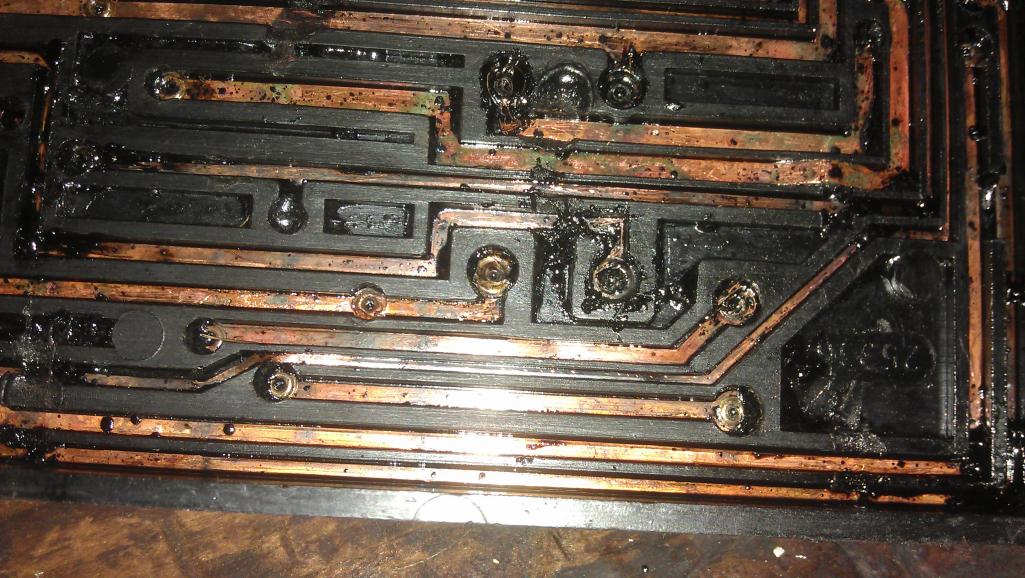
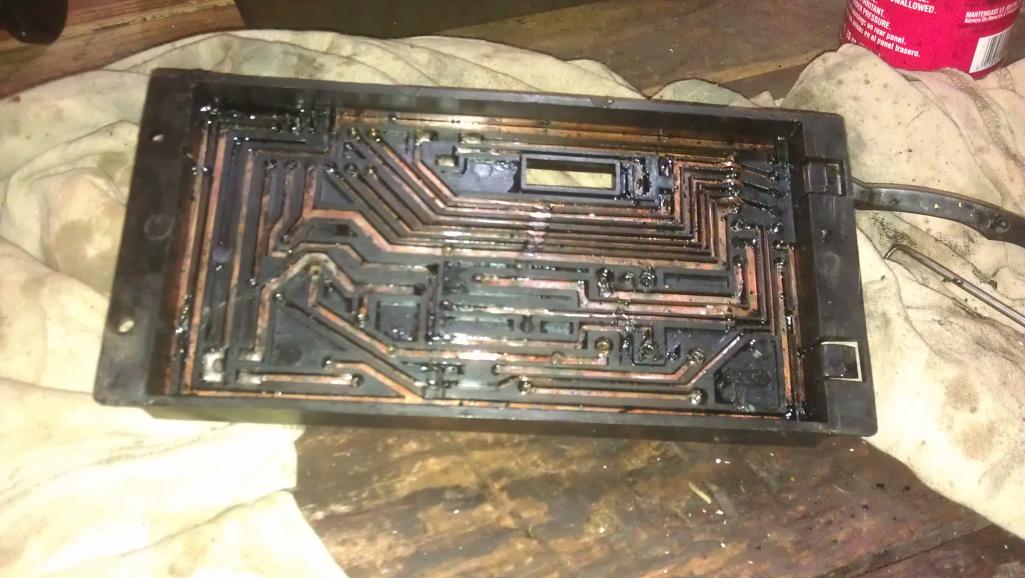
OK Campers who have repaired your relayboards, what did you us to clean the copper to be able to solder the connections WES (IMG:style_emoticons/default/idea.gif)
  |
   |

 
|
| Tom |
Apr 24 2012, 06:35 AM
Post
#2
|
|
Advanced Member Group: Members Posts: 2,139 Joined: 21-August 05 From: Port Orchard, WA 98367 Member No.: 4,626 Region Association: None |
I have never done a relay board, however I have repaired many circuit boards in electronic equipment. Use a pencil type eraser to clean the area to be soldered, then flush with isopropyl alcohol. Cleanliness is a must for good soldering.
If after cleaning, the solder does not "flow" well, try some flux. Just be sure to wash again after completed. Tom |
|
|
|
| budk |
Apr 24 2012, 06:51 AM
Post
#3
|
|
Yes! It's a Bumblebee! Group: Members Posts: 686 Joined: 24-July 10 From: Jasper, TN Member No.: 11,970 Region Association: MidAtlantic Region |
alcohol and a scuff pad.
|
|
|
|
| rwilner |
Apr 24 2012, 06:55 AM
Post
#4
|
|
No Ghosts in the Machine Group: Members Posts: 953 Joined: 30-March 10 From: Boston, MA Member No.: 11,530 Region Association: North East States |
I think some people have used a dremel with a wire brush on the end. I am doing something similar and that's what I'm going to try
|
|
|
|
| 02loftsmoor |
Apr 24 2012, 06:56 AM
Post
#5
|
|
Senior Member Group: Members Posts: 577 Joined: 26-June 11 From: Ft. Worth TX Member No.: 13,243 Region Association: Southwest Region
|
wondering would acid flux be a bit aggressive
QUOTE(Tom @ Apr 24 2012, 07:35 AM)  I have never done a relay board, however I have repaired many circuit boards in electronic equipment. Use a pencil type eraser to clean the area to be soldered, then flush with isopropyl alcohol. Cleanliness is a must for good soldering. If after cleaning, the solder does not "flow" well, try some flux. Just be sure to wash again after completed. Tom |
|
|
|
| 02loftsmoor |
Apr 24 2012, 06:57 AM
Post
#6
|
|
Senior Member Group: Members Posts: 577 Joined: 26-June 11 From: Ft. Worth TX Member No.: 13,243 Region Association: Southwest Region
|
those copper strips a very thin. be careful. I got this far using carb cleaner
QUOTE(rwilner @ Apr 24 2012, 07:55 AM) I think some people have used a dremel with a wire brush on the end. I am doing something similar and that's what I'm going to try |
|
|
|
| walterolin |
Apr 24 2012, 07:34 AM
Post
#7
|
|
Senior Member Group: Members Posts: 685 Joined: 30-November 11 From: Louisville, Ky Member No.: 13,838 Region Association: South East States |
Don't use acid core, the residual flux may continue to eat the copper.
Rosin core for electronics. Olin |
|
|
|
| Joe Owensby |
Apr 24 2012, 08:47 PM
Post
#8
|
|
JoeO Group: Members Posts: 527 Joined: 7-January 06 From: Spartanburg, SC Member No.: 5,385 Region Association: South East States |
I used the Dremel tool. I also made a little more room around the contact area so that I could get a tip from a larger soldering iron in to get plenty of heat to make a good connection. make sure the copper on both pieces is very clean. JoeO
|
 |
|
| Mr.242 |
Apr 24 2012, 09:34 PM
Post
#9
|
|
May your glass be smaller so it's always FULL! Group: Members Posts: 1,081 Joined: 10-June 08 From: Seattle Member No.: 9,160 Region Association: Pacific Northwest |
As a kid we put a penny in lemon juice and it made the penny shine.
Any reason why the board could not be soaked in lemon juice, then rinsed real good after the process? I know I have done this on my chrome fog light trim and it worked great. Just enough acidic properties to break up the oxidation. Have I not posted pictures of that experiment? |
|
|
|
| underthetire |
Apr 24 2012, 09:52 PM
Post
#10
|
|
914 Guru Group: Members Posts: 5,062 Joined: 7-October 08 From: Brentwood Member No.: 9,623 Region Association: Northern California |
You got a lot more tar to get off first. I heated mine up with a heat gun and soaked it in goof off. Then the lemon sounds like a good idea.
|
|
|
|
| Mike Bellis |
Apr 24 2012, 10:19 PM
Post
#11
|
|
Resident Electrician Group: Members Posts: 8,348 Joined: 22-June 09 From: Midlothian TX Member No.: 10,496 Region Association: None 
|
There is really no "electrical" need to clean the copper under the board. DC current travels in the center of the conductor unlike AC which has a skin effect. The copper terminals on the top can be cleaned for better contact.
Get all the loose debris off it. Check for any possible cold solder joints and fill with 3M electrical epoxy. Done. Pollishing the copper or wire wheeling it is a waste of time unles there is physical damage. |
|
|
|
| falconfp2001 |
Apr 24 2012, 11:59 PM
Post
#12
|
|
Pancho Pantera Group: Members Posts: 451 Joined: 5-December 10 From: Downey, CA Member No.: 12,456 Region Association: Southwest Region |
QUOTE(02loftsmoor @ Apr 24 2012, 05:56 AM) wondering would acid flux be a bit aggressive QUOTE(Tom @ Apr 24 2012, 07:35 AM) I have never done a relay board, however I have repaired many circuit boards in electronic equipment. Use a pencil type eraser to clean the area to be soldered, then flush with isopropyl alcohol. Cleanliness is a must for good soldering. If after cleaning, the solder does not "flow" well, try some flux. Just be sure to wash again after completed. Tom Acid Flux helps the copper accept the solder quicker. Using flux solder wire would work the best because you will use less heat against the copper. You'll have to clean the tip as you go though. |
|
|
|
| HarveyH |
Apr 25 2012, 06:28 AM
Post
#13
|
|
Member Group: Members Posts: 450 Joined: 19-June 03 From: Downingtown, PA Member No.: 843 |
I did this last summer. I scraped out the traces with a small screwdriver and dental picks. I then used a Dremel tool with a small round bristle brush and kitchen cleanser. Washed well with soap and water and flushed with Isopropyl Alcohol. Soldered with rosin core electronic solder (the old Tin-Lead type). On some terminals I used a bit of additional rosin flux. Cleaned with Isopropyl again. Coated the back of the board using Plasti-Coat or whatever it is that you use to dip tool handles in. I used an acid brush and multiple coats, alowing to dry overnight between coats.
Harvey |
|
|
|
| Bartlett 914 |
Apr 25 2012, 06:41 AM
Post
#14
|
|
Advanced Member Group: Members Posts: 2,219 Joined: 30-August 05 From: South Elgin IL Member No.: 4,707 Region Association: Upper MidWest |
QUOTE(HarveyH @ Apr 25 2012, 07:28 AM) I did this last summer. I scraped out the traces with a small screwdriver and dental picks. I then used a Dremel tool with a small round bristle brush and kitchen cleanser. Washed well with soap and water and flushed with Isopropyl Alcohol. Soldered with rosin core electronic solder (the old Tin-Lead type). On some terminals I used a bit of additional rosin flux. Cleaned with Isopropyl again. Coated the back of the board using Plasti-Coat or whatever it is that you use to dip tool handles in. I used an acid brush and multiple coats, alowing to dry overnight between coats. Harvey (IMG:style_emoticons/default/agree.gif) Best advice so far! I would not rely on any type of electrical epoxy. |
|
|
|
|
1 User(s) are reading this topic (1 Guests and 0 Anonymous Users)
0 Members:

|
Lo-Fi Version | Time is now: 19th September 2026 - 09:51 AM |
Invision Power Board
v9.1.4 © 2026 IPS, Inc.