
 Does the VDO CHT Gauge use a K or J-Type Thermocouple? Does the VDO CHT Gauge use a K or J-Type Thermocouple? |
|
|

|
Porsche, and the Porsche crest are registered trademarks of Dr. Ing. h.c. F. Porsche AG.
This site is not affiliated with Porsche in any way. Its only purpose is to provide an online forum for car enthusiasts. All other trademarks are property of their respective owners. |
|
|

| frank_c |
 Jul 15 2026, 07:46 PM Jul 15 2026, 07:46 PM
Post
#1
|
|
Member  Group: Members Posts: 97 Joined: 29-December 24 From: Austin, TX Member No.: 28,542 Region Association: None  |
As the title states, I'm trying to determine if the VDO CHT Gauge uses K or J-Type Thermocouple (TC).
Backstory: My '76 2.0 has a VDO CHT gauge installed by a PO (photo 1). I know there are better options out there, and I plan to replace it with something better the next time I drop the engine, but for now my main goal is to to get the VDO back to a functional state. The PO installed the thermocouple at the stock temp sensor location @Cyl #3 on the 2.0 head. In addition, the "Cold Junction" for the TC wiring was in the engine bay near the distributor. So, in an effort to provide a more accurate temperature reading, when I had the engine out last winter, I: 1. Replaced the old TC with a K-Type TC located under the #3 spark plug (photo 2) 2. Used a special K-Type connector in the engine bay and extended the K-Type TC wire all the way to the gauge (cold junction at gauge). The gauge needle did not move upon my initial test. To ensure the gauge was still good, I hooked it up directly to the old TC that I removed and heated the TC with a heat gun. The needle moved after I swapped +/-. I then re-connected the new TC wire I ran, this time swapping the +/- terminals, started the engine and confirmed that after a few minutes the needle moved (yay). Apparently, per the below Samba thread, some VDO CHT gauges have their +/- terminals swapped, so that solves that mystery: https://www.thesamba.com/vw/forum/archive/i...t-173868--.html But I noticed something else during this process which is why I'm asking about the TC type. I purchased K-type TC and wiring because what I read up until that point indicated the the VDO gauge used a K-Type TC. The K-Type TC wiring is color coded Yellow(+) and Red(-) [ see chart below]. However the wiring on the old TC I removed is Red(ish)/White. And according to the TC color chart, Red/White is a J-Type TC. To confirm, I checked and found that the White(+) lead of the TC I removed is indeed magnetic. I then found this thread on Shop Talk Forums stating that the VDO CHT actually uses a J-Type TC, not a K-Type as most commonly thought: https://shoptalkforums.com/viewtopic.php?t=144947 If it turns out that the VDO gauge does indeed use a J-Type TC, then since I already have the K-Type TC, connector, and wiring installed, the easiest path forward for me is to simply purchase a K-Type gauge (which may pose a new challenge). If it uses a K-Type, then I should be good for now. Sorry for the long post. Looking forward to hear what folks have to say who have been down this path already. 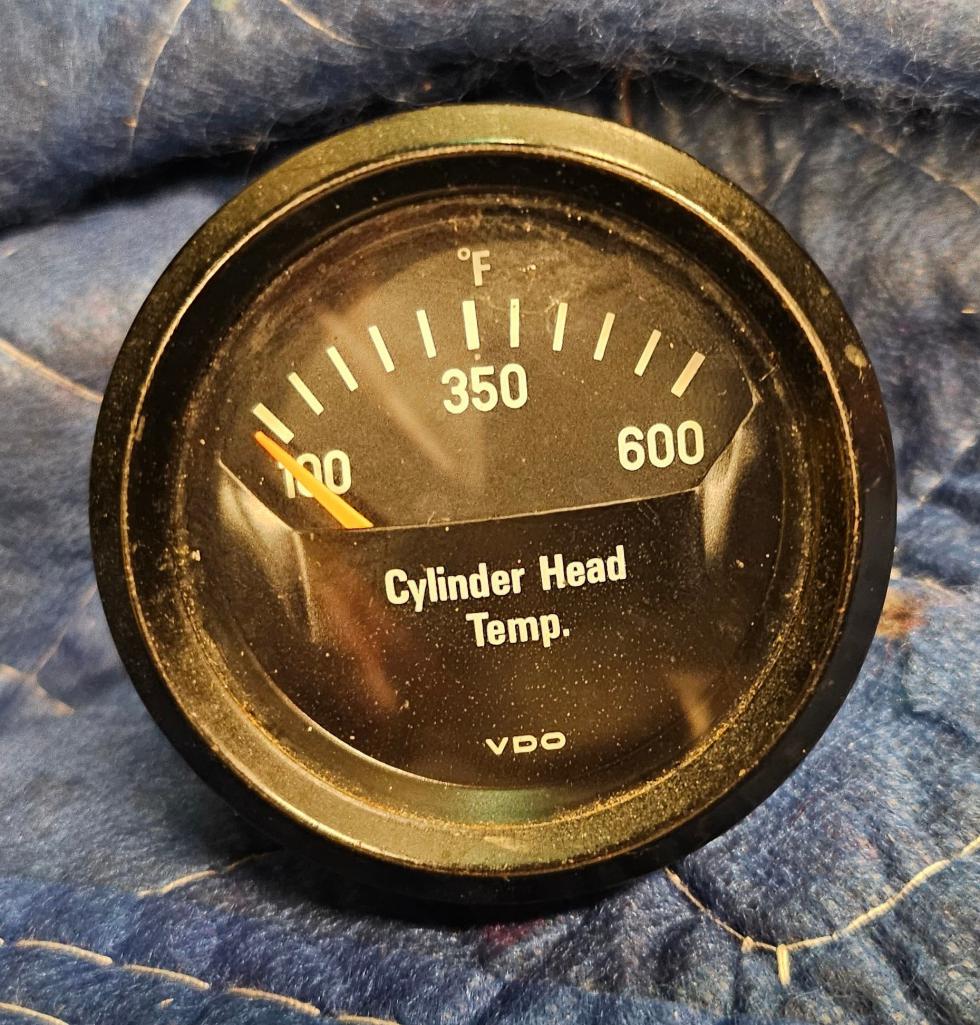 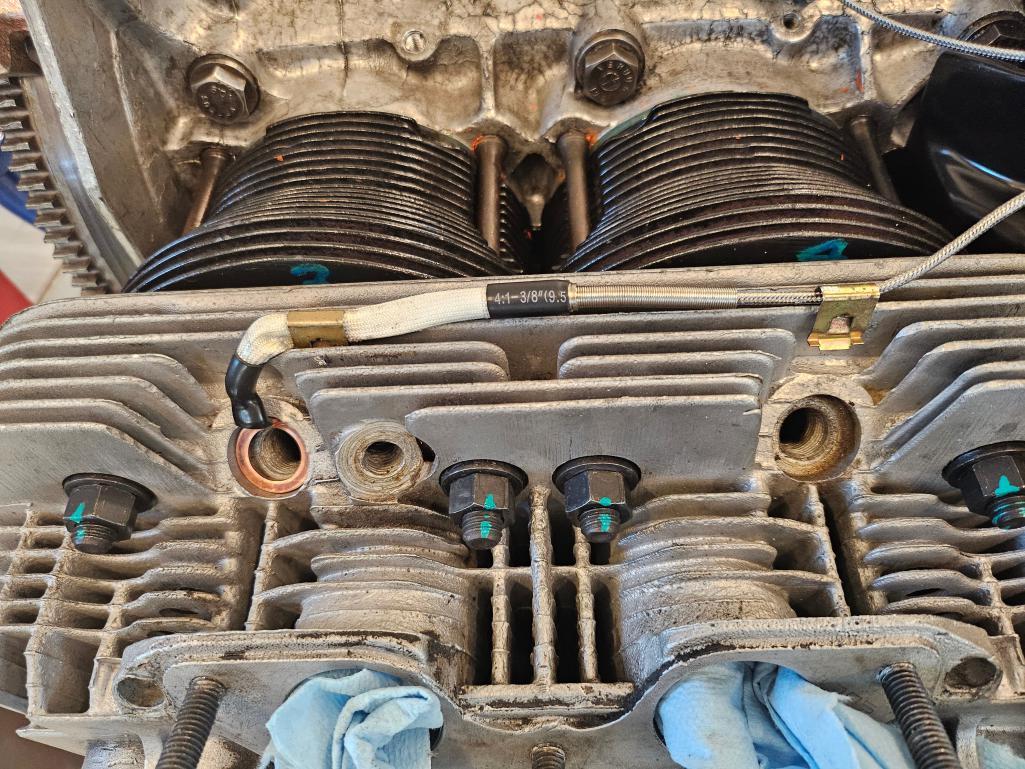 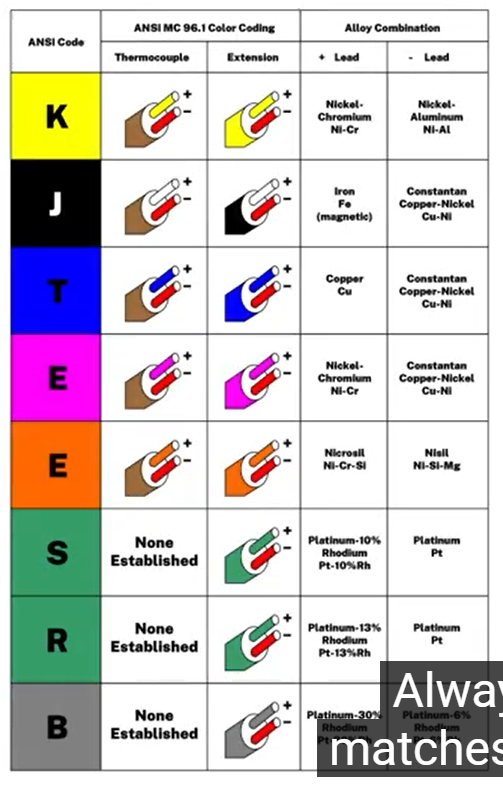 |
   |

 
|
  |
Replies
| Superhawk996 |
Jul 15 2026, 09:00 PM
Post
#2
|
|
914 Guru Group: Members Posts: 7,950 Joined: 25-August 18 From: Woods of N. Idaho Member No.: 22,428 Region Association: Galt's Gulch 
|
Ah if only life were so black and white.
Once upon a time (80s) I had an VDO with a J-type red and white thermocouple I’ll leave the whole cold junction discussion for another time. If OP truly wants to keep K-type thermocouple and wiring - then go for the Dakota. The cold junction compensation is a bonus. Note: negative lead of K-type (red) is Alumel and that is also highly magnetic. The magnet test is useful for determining the negative lead of either a J-type or K-type thermocouple but isn’t useful for determining one type vs the other. Note 2: color codes for thermocouples are not standardized internationally. |
|
|
|
| frank_c |
Jul 15 2026, 09:43 PM
Post
#3
|
|
Member Group: Members Posts: 97 Joined: 29-December 24 From: Austin, TX Member No.: 28,542 Region Association: None |
QUOTE(Superhawk996 @ Jul 15 2026, 10:00 PM)  Once upon a time (80s) I had an VDO with a J-type red and white thermocouple Hmm, curiouser and curiouser. The date code on my gauge is 7/86. Now I'm not sure what my gauge is (J or K). Why would the PO have used a J-Type TC (assuming the red/white is correct) if it was a K-Type gauge? In addition, the gauge did show temperatures in appropriate CHT range with the old TC. 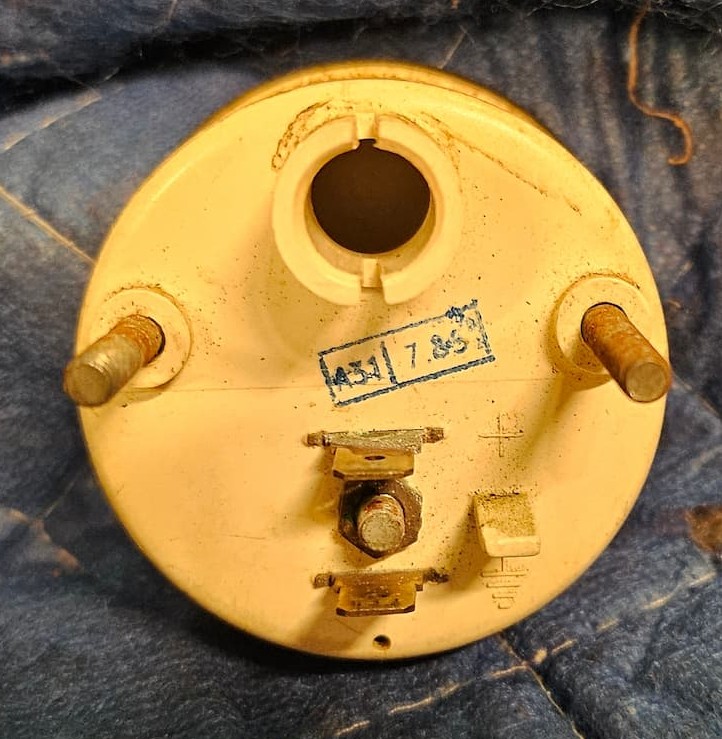 QUOTE(Superhawk996 @ Jul 15 2026, 10:00 PM) If OP truly wants to keep K-type sensor and wiring - then go for the Dakota. The cold junction compensation is a bonus. Given the number of unknowns here, I think you guys have convinced me to just move to a new gauge. I was trying to keep with analog gauges, but the DD looks like the way to go. Does anyone know if the Micro 1000 uses a K-Type TC? https://www.aircraftspruce.com/catalog/inpa.../CHT_gauges.php QUOTE(Superhawk996 @ Jul 15 2026, 10:00 PM) Note: negative lead of K-type (red) is Alumel and that is also highly magnetic. The magnet test is useful for determining the negative lead of either a J-type or K-type thermocouple but isn’t useful for determining one type vs the other. As usual, Superhawk is correct. I was going by the chart I posted that listed only the J-Type + lead as being magnetic, but I just went an checked and the K-Type is also magnetic. Thanks. So the old red/white TC I removed may or may not be J-Type. One more unknown. |
|
|
|
| Superhawk996 |
Jul 15 2026, 09:57 PM
Post
#4
|
|
914 Guru Group: Members Posts: 7,950 Joined: 25-August 18 From: Woods of N. Idaho Member No.: 22,428 Region Association: Galt's Gulch
|
QUOTE(frank_c @ Jul 15 2026, 11:43 PM) QUOTE(Superhawk996 @ Jul 15 2026, 10:00 PM) Once upon a time (80s) I had an VDO with a J-type red and white thermocouple Hmm, curiouser and curiouser. The date code on my gauge is 7/86. Now I'm not sure what my gauge is (J or K). Why would the PO have used a J-Type TC (assuming the red/white is correct) if it was a K-Type gauge? In addition, the gauge did show temperatures in appropriate CHT range with the old TC. I want to be really transparent here. In the 80s I purchased my gauge used. I don’t know whether it originally came with J-type but I had no reason to believe it had ever been changed out (purchased from acquaintance out of his Bug). After using it for years (almost 10) the thermocouple stopped working. It had developed a rust like oxidation on the iron wire. I had to clean the wires. Retwist and reinstall a new spark plug ring. That is why I believe it was J-type. My head temps always seemed reasonable and plausible so I never even thought about it. But as we discuss this who’s to say that in that era (or later) VDO could have been using K-type with red and white wires which could have been European sourced? But here’s the thing. When you get down to it J-type is more sensitive than K and will read hotter if the gauge was intended for K-type. Type J Sensitivity: 55 micro volt per degree Celsius Type K Sensitivity: 41micro volt per degree Celsius But either type will “work” (ie moves the needle as temp increase). You would have to check the gauge and thermocouple calibration to determine the type with absolute certainty. Lots of unknowns when dealing with old parts. It very well could be that VDO changed somewhere in production or that someone swapped parts. That’s why I said if only life was black and white. Maybe John Bell has some history he can add. @jbell959 I just recently purchased another used CHT from John that I assumed I will have to calibrate to be sure. I figured I’d start with a K-type thermocouple wire because that’s what I have on-hand. Unfortunately I haven’t done that yet to be know definitively what I now have. But like you I want the VDO analog look. More than I care about absolute accuracy. At the end of day these old VDO’s are best used for a general trend, not absolute numbers. If it helps you and you want to keep the VDO - I’ll calibrate mine this weekend and post the results and a how-to. |
|
|
|
Posts in this topic
 frank_c Does the VDO CHT Gauge use a K or J-Type Thermocouple? Jul 15 2026, 07:46 PM
 VaccaRabite K type.
And replace it NOW with something that is... Jul 15 2026, 08:32 PM FlacaProductions https://www.dakotadigital.com/index.cfm/pag...prod... Jul 15 2026, 08:56 PM
VaccaRabite K type.
And replace it NOW with something that is... Jul 15 2026, 08:32 PM FlacaProductions https://www.dakotadigital.com/index.cfm/pag...prod... Jul 15 2026, 08:56 PM
 Montreal914 More countries chart.
For the gauge there is a... Jul 15 2026, 11:36 PM
Montreal914 More countries chart.
For the gauge there is a... Jul 15 2026, 11:36 PM |
2 User(s) are reading this topic (1 Guests and 0 Anonymous Users)
1 Members: rgalla9146

|
Lo-Fi Version | Time is now: 16th July 2026 - 02:04 AM |
Invision Power Board
v9.1.4 © 2026 IPS, Inc.