
 1975 1.8 Driver Restoration, Driver quality restoration of a 1975 1.8 |
|
|

|
Porsche, and the Porsche crest are registered trademarks of Dr. Ing. h.c. F. Porsche AG.
This site is not affiliated with Porsche in any way. Its only purpose is to provide an online forum for car enthusiasts. All other trademarks are property of their respective owners. |
|
|

| didenpx |
 Oct 5 2024, 02:06 PM
Post
#1
|
|
Member  Group: Members Posts: 128 Joined: 1-September 23 From: Usa Member No.: 27,556 Region Association: North East States 
 |
I’m a newcomer to the air cooled world. I picked up a 1975 914 1.8 project car last Fall that I’m just now beginning to work on. It seems to be mechanically stock and structurally sound and has ~120K miles on what appears to be the original engine (it doesn’t look to me as if it’s ever been pulled).
I found it on Craiglist in Maine where it was in the hands of a VW bus/bug enthusiast who was the third owner and had decided to focus his energies on a bus restoration instead. It was last registered an on the road in 2017 when the second owner had it. When I bought it it lot drove and came with an assortment of Restoration Design repair panels, several spare doors from earlier cars, some foglight front bumpers, spare seats, etc.. In a first for me when it comes to project cars the electrics all function properly and appear never to have been monkeyed with. Lights, blinkers, engine heater fan, hazards, everything. Photos below tell the story but the worst of the rust appears to be in the aft section of the LH outer longitudinal. I haven’t pulled the battery and ECU out yet, but from what I can see underneath the car, inside the engine bay, and between the quarter panel and the engine compartment tin the hell hole appears solid (but I’m prepared to find surprises). The rear of the car seems worst off with rot from the foam above the tail lights partially cut out and partially corrected (I’ll be cutting that all back out and starting the job fresh). It was also hit from behind on the LH side and although I haven’t measured everything out yet, from what I can see underneath things don’t seem to be out of whack (maybe wishful thinking as the panel gaps for the rear trunk are uneven). The trunk lid itself somehow didn’t rust out along the rear edge, but it’s suffered a lot of abuse in the form of a now missing luggage rack and a black fiberglass spoiler that had been attached with wood screws. The front of the car doesn’t show any signs of impact damage but the trunk lid sits high when latched on the LH side. My plans are to do a driver quality restoration (between a Hagerty 2 and 3) and get it on the road where I can enjoy it; I’ll cut out and weld the rusty sections, do as much of the body work myself as possible (thankfully it is very straight and the paint meter indicates there shouldn’t be a lot of bondo hiding under the old re-spray) and get a professional re-spray at a local body shop. I’ll either farm out or attempt to DIY the engine work myself. Since I’m assuming the engine will need a rebuild (see below) I’d definitely like to increase the displacement while staying with the stock FI setup. I just started assessing the car in the last couple of weeks and have focused on the health of the engine. It’s still got the original L-jet FI (which I intend to keep). When I got it, it fired up easily but was extremely lumpy and stumbled badly coming off idle. After fixing vacuum hose routing (mostly anyways), adjusting points, doing timing, and adjusting valves it idles well at 850 rpm, sounds much healthier, and revs up from idle nicely (all this is based on stationary testing as the car is not on the road). Today I warmed the engine up and did compression test (throttle propped open with screwdriver) followed by a leak down test. I think the results tell me that I have a tired engine needing rebuilding: Cylinder Compression Leakdown 1 105 15% 2 105 20% 3 105 21% 4 105 23% I didn’t crawl around under the car to listen for leaking valves, but for each the cylinders I could hear hissing in the crankcase as soon as I pressurized the cylinders, which I assume is a bad thing. I’m going to discuss rebuild options at a local multi-generation family garage that started out as a VW shop; if they can do the work within my budget then I’ll probably go that route. I plan to drop the engine sometime late this month. One thing I need help on at this point is figuring out the remaining vacuum lines. I have a large inlet on the air box that looks from the diagrams as if it should go to the charcoal canister but there was no hose on it when I got the car and I don’t know where it should be routed, or even where the canister is (is it that plastic contraption sitting on top of the fuel tank!?). And just yesterday I noticed there is another nipple on the metal thing that the coil bracket attaches to…what’s that supposed to go to?? Looking forward to sharing my progress. This is a great forum that I’ve already learned a lot from! 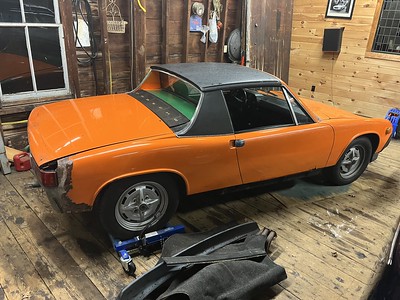 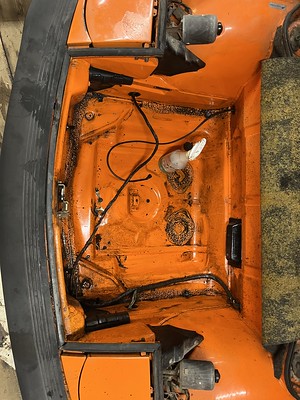 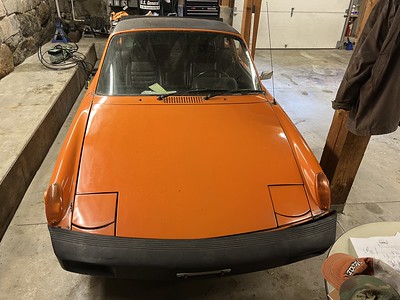 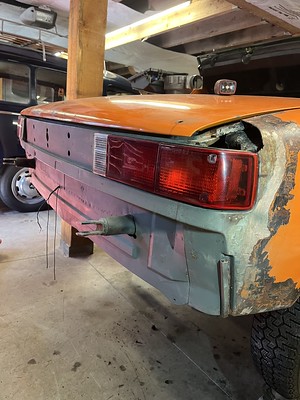 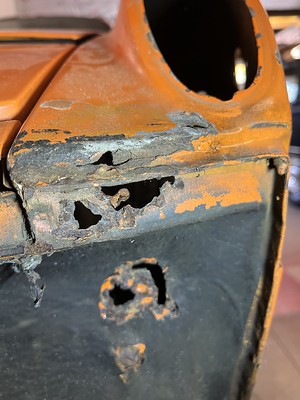 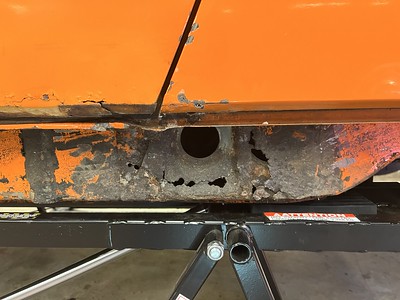 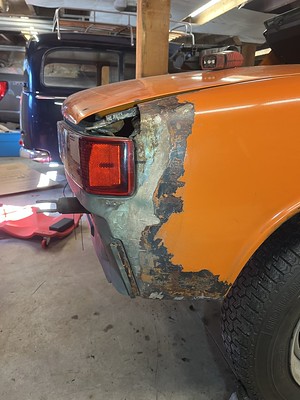 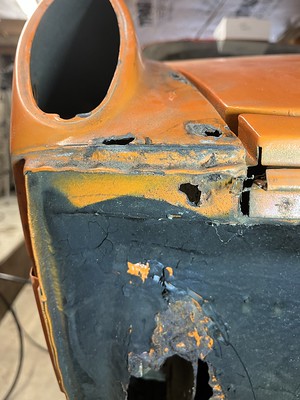 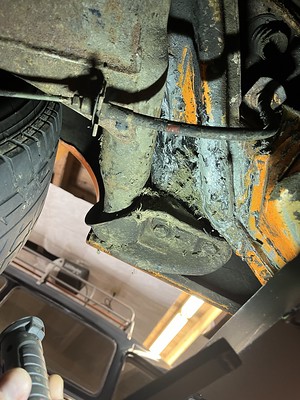 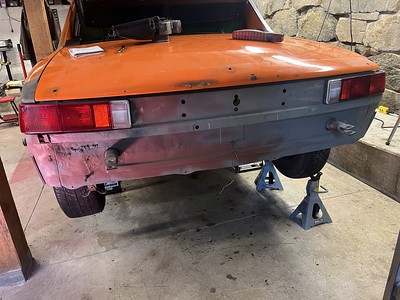 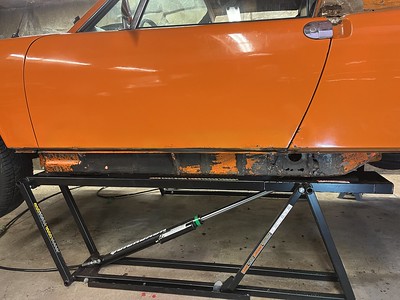 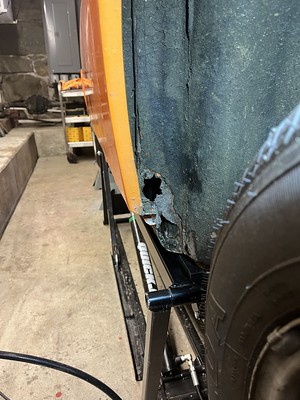 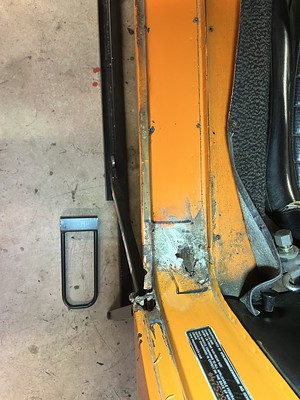 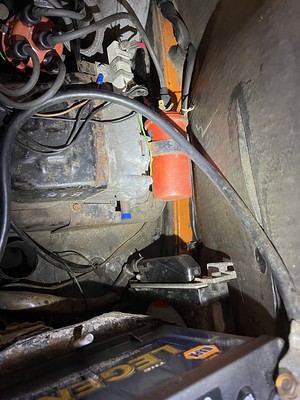 Attached image(s) 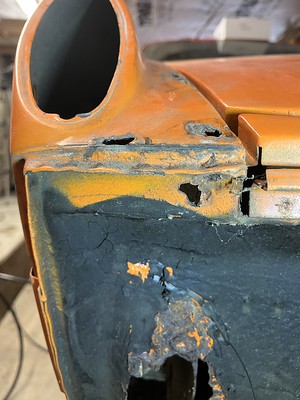
|
   |

 
|
  |
Replies(60 - 65)
| didenpx |
Jan 5 2026, 07:40 PM
Post
#61
|
|
Member Group: Members Posts: 128 Joined: 1-September 23 From: Usa Member No.: 27,556 Region Association: North East States
|
@Montreal914 I really know very little about these engines and am slowly learning as I go. What do you see in the photos that makes you think it may have been used in racing application? Thanks!
Paul |
|
|
|
| Montreal914 |
Jan 5 2026, 10:04 PM
Post
#62
|
|
Advanced Member Group: Members Posts: 2,229 Joined: 8-August 10 From: Claremont, CA Member No.: 12,023 Region Association: Southern California
|
I am not an expert either. Your specific 71.76mm number caught my attention. If this is the real stroke, then it was modified. Why would someone go to the trouble of slightly increase the stroke by only 0.76mm? The only reason I can think of is to stay within the boundaries of the 2 liter class.
Now for the 102mm cylinders, these can be problematic and known to warp as their wall are very thin. Hopefully the real engine experts will chime in. (IMG:style_emoticons/default/smile.gif) |
|
|
|
| didenpx |
Jan 6 2026, 05:20 AM
Post
#63
|
|
Member Group: Members Posts: 128 Joined: 1-September 23 From: Usa Member No.: 27,556 Region Association: North East States
|
Thanks!
|
|
|
|
| 930cabman |
Jan 6 2026, 05:54 AM
Post
#64
|
|
Advanced Member Group: Members Posts: 4,887 Joined: 12-November 20 From: Buffalo Member No.: 24,877 Region Association: North East States
|
QUOTE(Montreal914 @ Jan 5 2026, 11:04 PM)  I am not an expert either. Your specific 71.76mm number caught my attention. If this is the real stroke, then it was modified. Why would someone go to the trouble of slightly increase the stroke by only 0.76mm? The only reason I can think of is to stay within the boundaries of the 2 liter class. Now for the 102mm cylinders, these can be problematic and known to warp as their wall are very thin. Hopefully the real engine experts will chime in. (IMG:style_emoticons/default/smile.gif) Waiting also, have wondered why 98 or 100mm pistons are not a thing. If 102 and greater are trouble, why not reduce the size a bit? |
|
|
|
| didenpx |
Jan 11 2026, 03:46 PM
Post
#65
|
|
Member Group: Members Posts: 128 Joined: 1-September 23 From: Usa Member No.: 27,556 Region Association: North East States
|
Did some more work on evaluating the engine (with expert assistance).
We learned that the likely cause the 3-4 head was pulled was broken valve spring and loose valve guide on one of the valves. That head came bare (no rocker arm, missing 2 valves) Heads have been ported. I have pulled the pistons and did a much more careful measurement of stroke and it is 74mm so it’s a stroker crank and the engine displacement should be in the 2.4L range. Once I get some decent photos put together and we have evaluated the pistons and cylinders (cast iron 102mm cylinders, flat top JE pistons) I am going to start a stand alone thread on the engine in hopes of getting some of the experienced engine builders here to weigh in with advice and information. But right now the operating theory is that the bottom end is fine and it just needs an oversized valve guide, two new valves (were missing when I got the engine), and reassembly….assuming I can reuse P&Cs. This is definitely going into the car unless there is something catastrophic that appears during case tear down. |
|
|
|
| didenpx |
Jan 23 2026, 06:50 AM
Post
#66
|
|
Member Group: Members Posts: 128 Joined: 1-September 23 From: Usa Member No.: 27,556 Region Association: North East States
|
I've never worked on engines before so working with an experienced engine builder to evaluate the mystery 2.0 has been a humbling experience.
Initially I had the pistons at 102mm (measured at the face). But measured about 1/2" from rings they are 103mm. Initially I measured the stroke at marginally above 71mm. Then I did a "more careful" measurement (measuring end of rod after pistons were removed) and arrived at 74mm. Yesterday after fitting a jug and piston and using a degree wheel to determine true TDC we determined it is a 71mm stock stroke crank. Duh again. The crank has welded counterweights so assumption at this point is that it's DPM maybe sourced from European Motoworks (where I'm currently assuming the big bore kit originated). Based on initial measurements of cam it may be a EMW "S" grind, to be confirmed soon as we prepare to split the case. Looking through the jug holes the engine internals are looking good (near zero wear on the cam lobes). |
|
|
|
|
2 User(s) are reading this topic (2 Guests and 0 Anonymous Users)
0 Members:

|
Lo-Fi Version | Time is now: 22nd November 2026 - 03:20 PM |
Invision Power Board
v9.1.4 © 2026 IPS, Inc.